SECRETS OF THE INTERNAL FORCE MASTERS
OVERVIEW
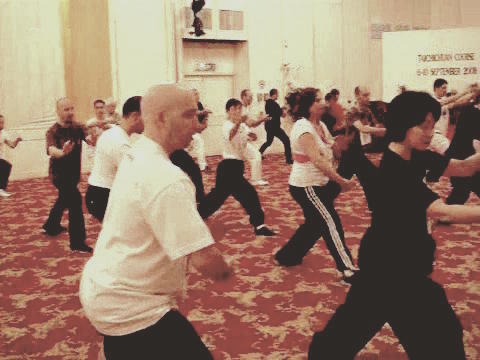
Course participants enjoy a solo form practice that bring many benefits like ensuring correct form and flow, attaining a one-pointed mind, and expanding the spirit
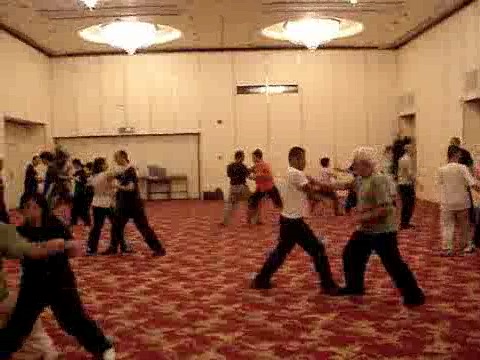
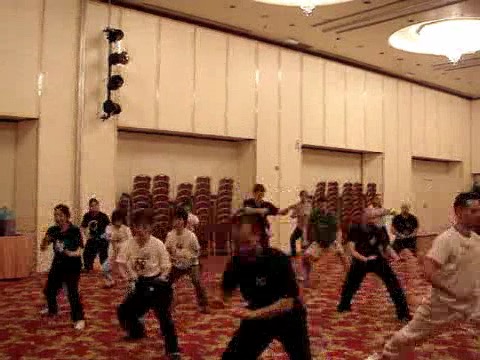
The Intensive Taijiquan Course in Penang, Malaysia from 5th to 11th September 2008 was a historic one. Participants ranged from beginners to masters. From stances and footwork, participants progressed to combat application and spiritual cultivation.
|
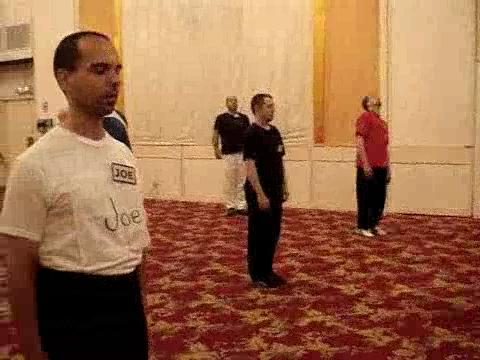
In many ways the lessons shown here are the most important in Taijiquan. The participants smile from their heart and enter Tao. Then they enjoy a chi flow, followed by learning the fine points of various stances. These lessons set the hallmarks of Wahnam Taijiquan, which is a training of mind and energy for good health, vitality, longevity, mental freshness, combat efficiency and spiritual joys. |
|
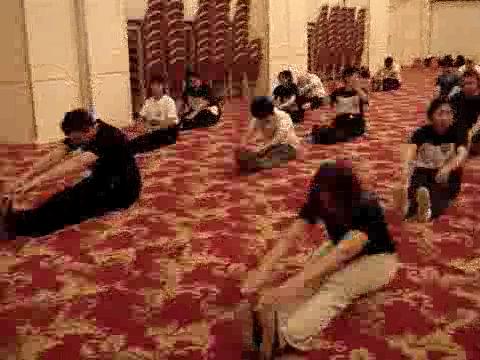
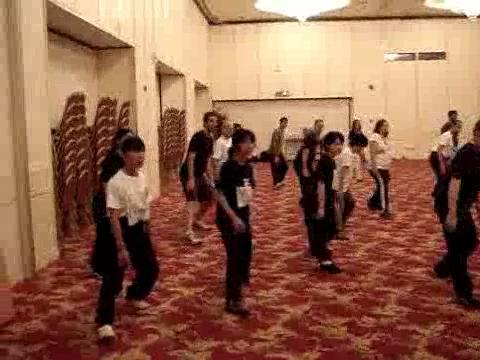
The exercises here are not just for stretching leg muscles. They are chi kung exercises for flexibility. As chi kung, they have other benefits too. For example, after performing one, more or all of the exercises below, a practitioner may go into chi flow and enjoy its relevant benefits, like overcoming pain and illness and increasing vitality. |
|
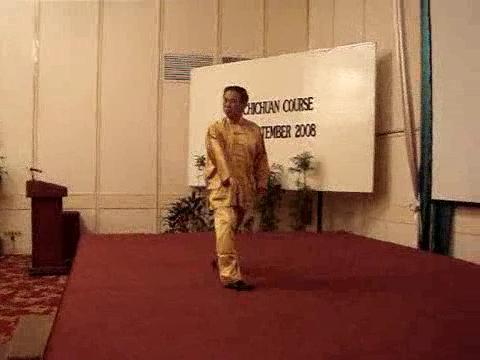
Moving forward in a straight line with toes pointing and knee bending straight ahead not only causes knee injuries but also exposes the exponent to risky attack during combat. The correct way of moving forward is described in Taijiquan principles like "differentiating yin-yang", "starting from the back leg", "rotating the waist" and "rotating the knees". |
|
If we follow Taijiquan footwork principles like moving from the back leg and rotating the waist, will we be slow in combat? Yes, if we remain at the beginners' stage. In fact, at the beginning we purposely move slowly so that we can perform the necessary steps correctly. But once we are fluent with the steps, we can move very fast by reducing the size of our movements and the number of steps. |

|
There is much profundity in changing directions which gives us many advantages in combat. The various ways to move from one direction to another can be classified into five factors as follows: left-right leg mode; eight directions; front, mid, end points of reference; yin, yang, straight leg approach; and clockwise-anticlockwise turning. |
|
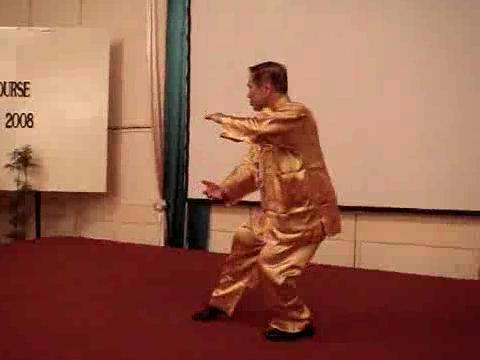
Rotation of the waist is a very important principle in Taijiquan. Surprisingly, not many Taijiquan practitioners do this correctly, which often results in their having knee injury and back pain. On the positive side, applying this principle, even leaving aside internal force, a small-sized exponent can overcome a bigger-sized and stronger opponent. It also contributes to agility and vitality. |
|
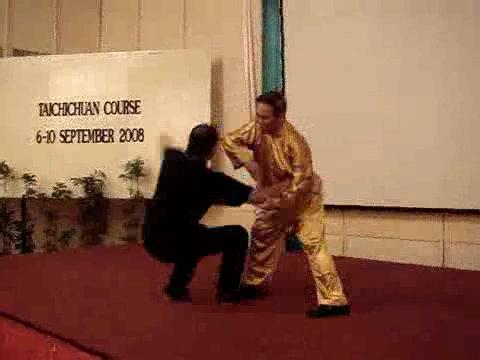
Even without using internal force, you can apply waist rotation to overcome an opponent who is bigger and stronger than you. If hethe opponent pushes you on your left, you rotate to your left. If he pushes you at your right, you rotate to your right. What should you do if he pushes you towards your top or bottom, or straight into you? You deflect him upward or retreat and pull him to the ground. |
|
How did Taijiquan start? After practicing his Shaolin Kungfu, Zhang San Feng entered a state of Tao. In his extreme stillness, there was motion. Gradually his movements became vigorous, resembling flowing water and floating clouds. He stylized these "Cloud Hands" to teach his few disciples. Much later these "Cloud Hands" were further styled into a sequence of patterns collectively known as "Grasping Sparrow's Tail". |
|
|
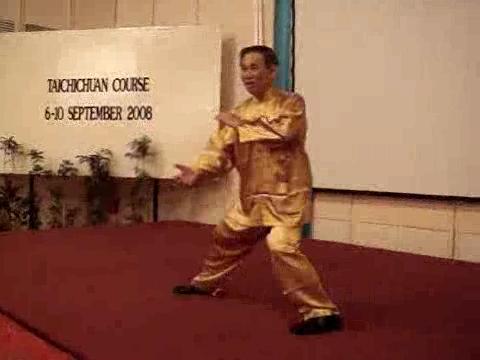
Solo form practice is an important aspect in any kungfu training. There are many benefits, like learning correct form and flow, familiarizing ourselves with Taijiquan techniques for combat, generating an energy flow, developing internal force, focusing our mind, and expanding our spirit. Those who are ready may have a glimpse of Tao. |
|
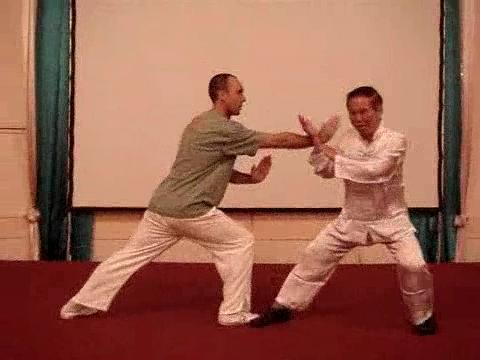
We purposely reduce the techniques to the minimum in Pushing Hands so as to focus on developing skills. When an attack is short-range, we deflect it with our arm. When an attack is medium-range, we sink back our stance using waist rotation. Amongst the skills developed in this stationary Pushing Hands are being relaxed throughout, generating an energy flow, sensing an opponent's momentum and feelings, and using an opponent's momentum to defeat him. |
|
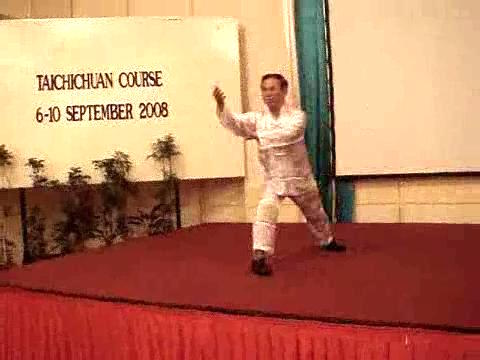
When an attack is short-range, use the hand. When an attack is medium-range, use the body. When an attack is long-range, use the feet. The hands, body and feet must be in harmony, constituting the three external harmonies. Your essence, energy and spirit, or jing, qi and shen, must also be in harmony, constituting the three internal harmonies. Applying these six harmonies, you can make every movement in Taijiquan a master-piece. |
|
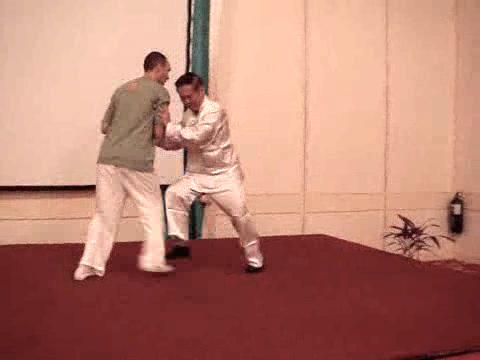
Many Taijiquan practitioners are unaware of its principles and safety precautions in Pushing Hands.. Before you attempt to push your opponent, it is crucial to close him so that he may not strike you in surprise. You should also push from your back leg, rotate your waist, and ensure your groin and other vital points are protected. |

|
While many people know that age, size and sex are not decisive factors in Taijiquan, not many Taijiquan practitioners can realize this in practice. The two factors in Taijiquan that enable an elderly, small-size woman to defeat a young, muscular man, for example, are internal force and leverage advantage. In the Frontal Push shown in this video series, the principles to gain leverage advantage are employed. |
|
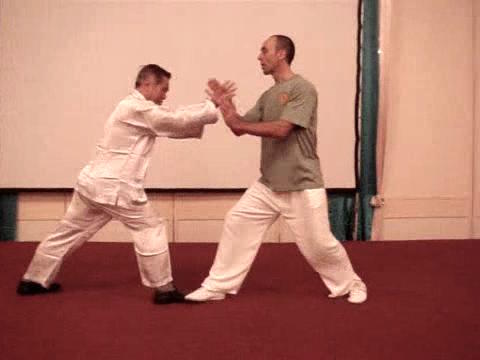
Grandmaster Wong explains how to roll back against an opponent?s frontal push using the roll forward method. Beginners should roll back as soon as an opponent rolls forward. Advanced exponents may start to roll back only when an opponent pushes. A very skilful exponent may deflect an opponent?s push or other forms of attack, and simultaneously strike him. |
|
The great Taijiquan master, Wang Zong Yue, said that if you were big and strong and you defeated your opponent, it was not much of an achievement. But if you were small-sized and less muscular, yet you defeated him, you had great skills. Age, size and sex are not decisive factors in Taijiquan, and the video clips here reveal this fact. |
|
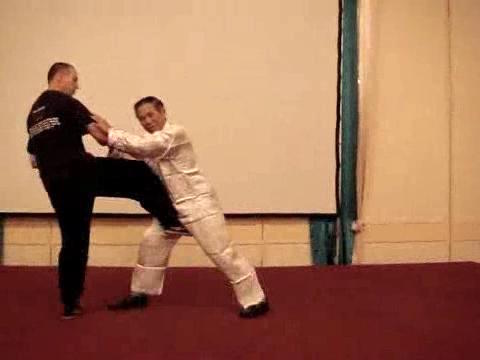
You can effect a frontal push by rolling your front leg forward, or stepping your back leg forward. In either case, besides covering an opponent?s hands so that he may not strike you, it is very important to cover his front leg too so that he may not kick at your groin. It is indeed surprising that even some masters neglect this safety principle and expose themselves to risky kicks. |
|
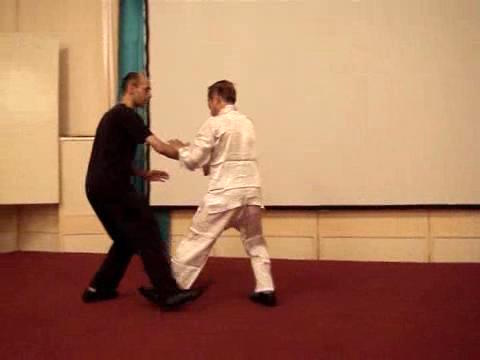
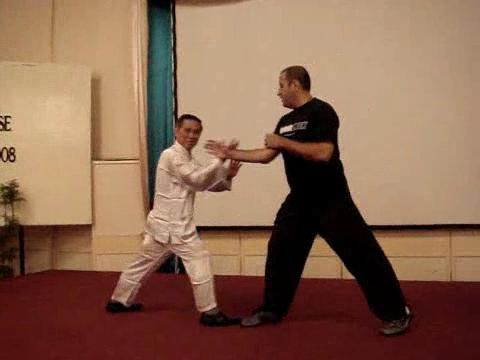
When an opponent rolls forward or steps forward to push you, you may roll back or step back accordingly, or you may break mode, i.e. you step back when he rolls forward, and vice versa. Reversely, you may cause him to break mode, often without him realizing. In this way you can force your opponent to use an unfavoured leg mode and thus gain a tactical advantage. The same principle applies to the hand mode. |
|
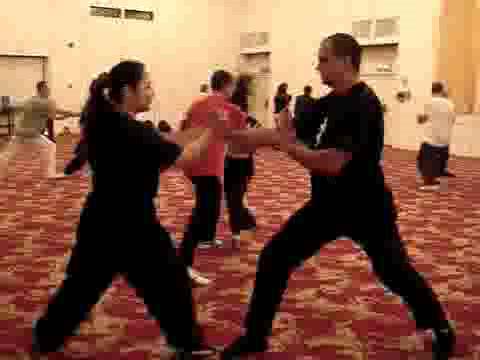
If your opponent is big-sized, it may be difficult to push him. You can gain a tactical advantage by pushing him, or attacking him from a side. You must take care to cover him as you move to your favorable position, and unbalance him before you push. You should also space yourself well so that you can push from your back leg, and not from your shoulders. |
|
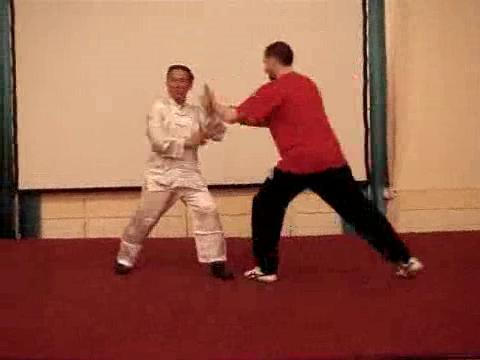
Besides developing important skills, Pushing Hands is a lot of fun. It is interesting to see small-sized women pushing big, strong men many metres away. The men, of course, enjoyed being pushed. This is Taijiquan, where age, size and sex do not matter, and you can push people around and all enjoy it. |
|
Grandmaster Wong explains how you can defend against a right push and against a left push. Irrespective of attacking or defending, you must cover yourself well against possible surprised attack, and have good timing and good spacing. Grandmaster Wong also demonstrates the versatility and usefulness of the Unicorn Step. As in all aspects of Taijiquan training, the principles of Pushing Hands can be rewardingly applied to our daily lives. |

|
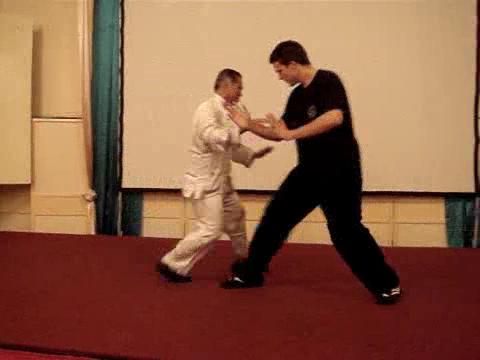
Would you like to be behind your opponent in combat. Obviously you can remarkably increase your chance of beating him if you can do so. You can learn this skill here. It is important to cover yourself against possible surprised attacks while you move to the back of your opponent. You also learn how to neutralize if your opponent succeeds in getting to you back. Grandmaster Wong and Sifu Jeffrey also show how participants of other schools may perform their Pushing Hands |
|
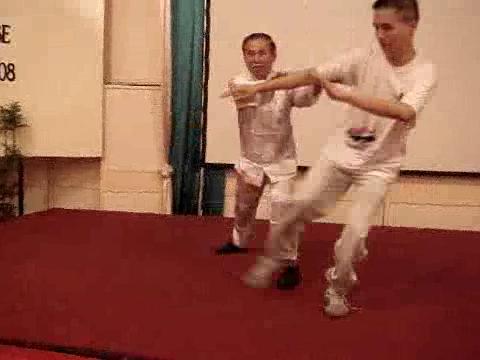
Tactics may be classified into "proactive" and "reactive". (These two terms are provided by Sifu Piti of Colombia to replace the earlier, less appropriate terms of "active" and 'passive".) The proactive tactics shown here are "Continuous Attacks" and "Confusing Attacks". If you push your opponent twice in a continuously way, your change of success is more than if you push him twice with each push separated by a gap of time. Or you may confuse your opponent, pretending to push in one way, then push in another |
|
In the proactive tactics, we initiate the tactics. We attack continuously or we confuse our opponent in our attack. In the reactive tactics, we let the opponent attacks first. Then we counter-attack as soon as he completes his attack, leaving no time in between. Or we do not allow him to complete his attack; we intercept it and counter-attack. Intercepting does not mean going against an opponent’s momentum head-on. First we neutralize his momentum, then without allowing his momentum to complete its course, we counter-attack him. |
|
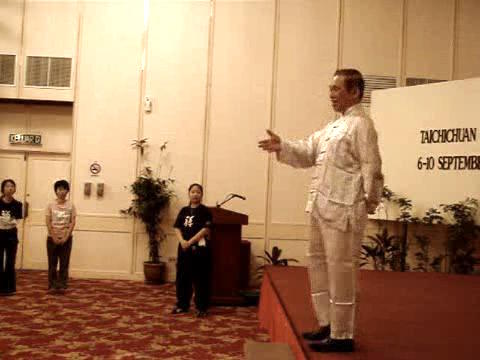
Pushing Hands is an essential aspect in Taijiquan training. It is an ingenuous way to develop crucial combat skills. In stationary Pushing Hands, amongst other skills, we develop sensitivity, flow with an opponent, and use his momentum against himself. In mobile Pushing Hands, we develop spontaneous and correct footwork, as well as consolidate basic skills. Most important, it is a lot of fun, and we conclude our Pushing Hands in chi flow and entering Silence. |
|
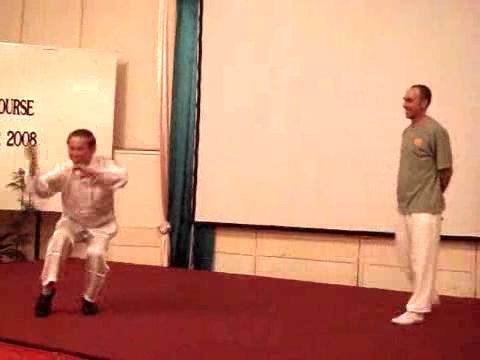
Many Taijiquan practitioners have a mis-conception that practicing ?Tui Shou? or Pushing Hands is sufficient to make them combat efficient. Pushing Hands is excellent for developing combat skills, but by itself it is insufficient to make a practitioner combat efficient. He has to progress to ?Da Shou? or Striking Hands, where techniques are applied for combat. Striking Hands does not refer just to striking. It refers to all the four categories of attack, namely striking, kicking, felling and gripping. These four categories of attack are progressively sophisticated in their combat functions. |
|
Grandmaster Wong explains some important Taijiquan principles of combat, like the three ranges of spacing, deflecting and not blocking an opponent?s attack, and rotation of the waist to neutralize an opponent?s momentum. Unlike other schools, martial art training in our school is relaxing and fun. Grandmaster Wong causes much laughter when he shows course participants how to pluck grapes, and warn them to beware of monkeys. |
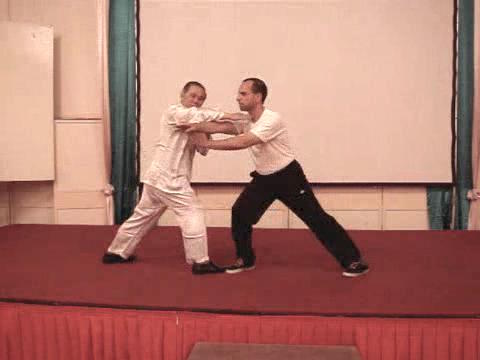
|
The tactic of ?lian xiao dai da?, which means ?defence cum counter? or ?deflect cum counter? is often heard in Taijiquan but little understood. Participants spend some time practicing this tactic using ?White Snake Shoots Venom? and ?Immortal Waves Sleeves?. Grandmaster Wong also shows another important tactic, ?bu zhao er da? which is ?no defence direct counter? |
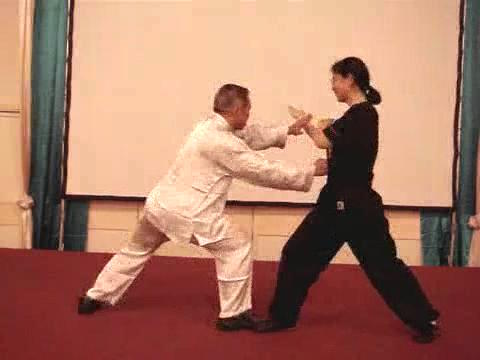
|
Some important techniques and tactics are practiced, like the techniques of opening or closing an opponent?s attack or defence, and the tactics to continuous attacks and of ?sounding east striking west?. Grandmaster Wong explains that these techniques and tactics can be used in daily life, like wooing a pretty girl for example. |
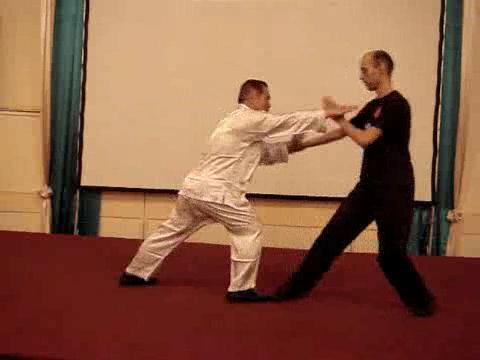
|
There are various ways to use the same techniques for attack and counter. For example, when an opponent executes a top attack like a palm thrust, you may open the attack, close it or deflect it as you counter. To be cost-effective, these various ways of application are standardized into a routine. When you are proficient with the routine, you can gradually release control so that eventually the exchanges are free and random. |
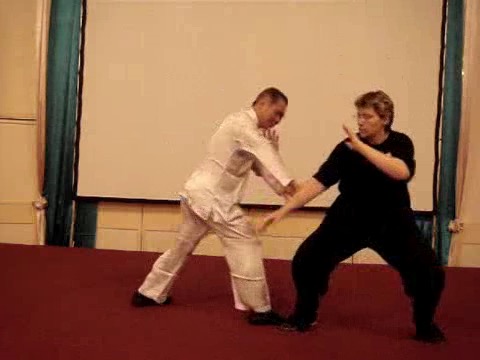
|
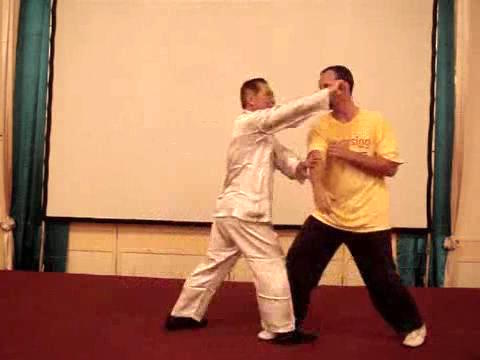
A low attack can be executed with the pattern "Low Stance Vertical Punch", which describes the pattern technically. Pierre Toth from Japan has provided a poetic name for the pattern, "Sun Enters Lotus", which we shall use. A good defence against the low attack is "Low Cloud Hand". For a top attack we use "White Snake Shoots Venom", and for a middle attack we use "Single Dragon Emerges from Sea". "Immortal Waves Sleeves" can be employed to ward off both the top and the middle attack. |
|
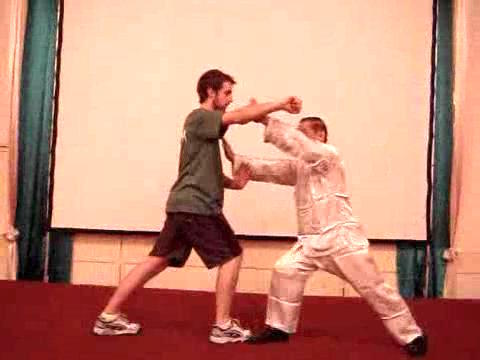
Strikes may come from any directions, but can be generalized into four main categories ? top, middle, bottom and sides. The side attack we use in this video series is a ?horn punch? executed in the pattern poetically known as ?Yellow Bee Sucks Pollens?. The counter is equally poetic, ?Jade Girl Threads Shuttle?. Grandmaster Wong highlights two important points when applying a side attack. You must have correct spacing, and you must close your opponent adequately. |
|
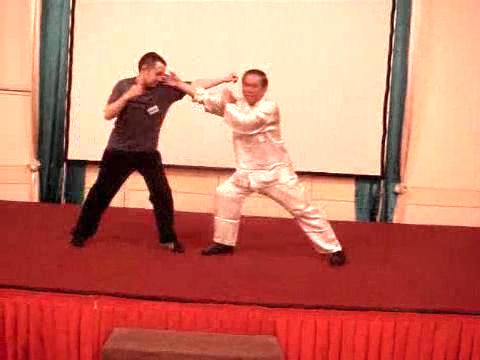
“Jade Girl Threads Shuttle” is a beautiful pattern. Applied skillfully, you strike your opponent at the time he thinks he has hit you. There are some fine points in its application. Can you remember them? If your arms are being closed, how would you apply the "Jade Girl" when your opponent is swinging a "Yellow Bee" at you? Simple. Just sink back your body to execute the counter. There are, of course, other responses to the "Yellow Bee". You may, for example, use "Cloud Hand" or "Immortal Waves Sleeves". |
|
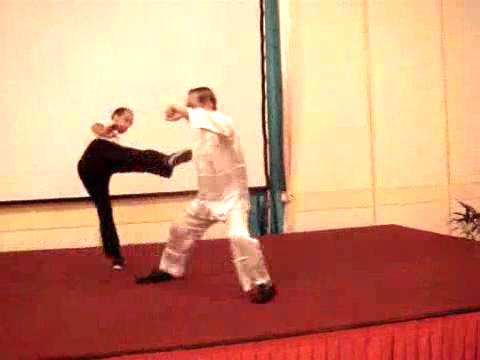
By varying the hand forms and stances of the four basic hand strikes, you can have a great variety of attack patterns. For example, you may change your low stance to a reversed unicorn step, and a vertical punch into a reversed leopard fist to execute a low attack. On the other hand, when you can defend against these four typical hand strikes, you can defend against any hand strikes! Grandmaster Wong demonstrates the application of this philosophy against a Boxer. He handles the Boxer so well that it is like playing with the Boxer |
|
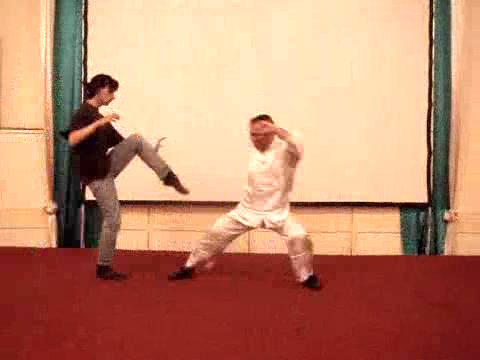
Many Taijiquan practitioners, as well as other martial artists, are at a loss on how to defend against kicks, especially when they are executed continuously. An excellent Taijiquan pattern against kicks is "Striking Tiger Poise". It employs some characteristic Taijiquan principles, like "using minimum force against maximum strength" and "starting later arriving earlier". It does not matter how powerful the attack is, and enables you to strike an opponent as soon as he completes his attack. |

|
“Striking Tiger Poise” is a very useful pattern, but it must be performed correctly with good timing and spacing. You should not be hasty in performing this pattern in combat against kicks as you will have sufficient time because the opponent needs time to adjust himself to execute the kick. It is important that you place your hands far away from the kick. Indeed, hands are no necessary in this pattern, unless you wish to strike your opponent’s kicking leg. Correct body-movement and good footwork are crucial for a successful application of the pattern. |
|
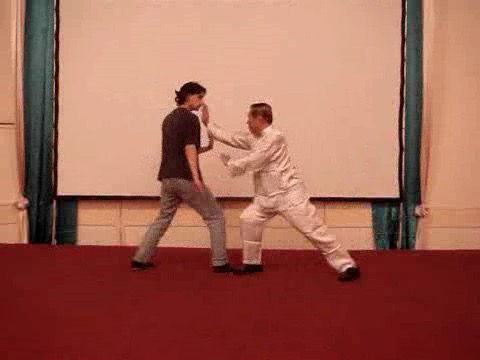
Would you believe that you can use just one Taijiquan pattern against any kicks? Darren, who is very skillful at kicking, attacks Grandmaster Wong with a variety of kicks -- high, double, sweeping, continuous and snap, but the Grandmaster neutralizes all the kicks using only one pattern, “Striking Tiger Poise”. It does not matter if the kicks are powerful or fast because you have placed yourself outside the range of kicks. |
|
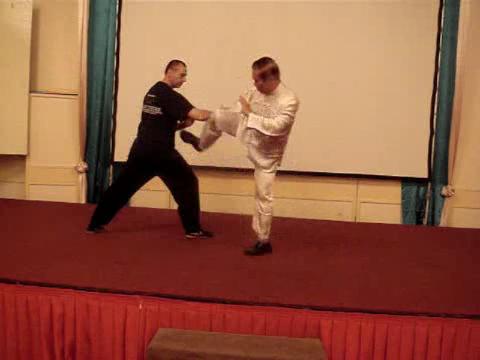
A golden opportunity to strike an opponent is when his attack is spent but he has not recovered from his movement. This tenet is especially effective against an opponent who kicks at you, because kicking needs more time for movement recovery. There are three main positions an opponent would adopt after kicking. He places his kicking leg forward, places it at the same spot, or places it behind, taking note that the placement may not necessarily be in a linear position. Understanding this combat principle, you can adjust your footwork accordingly. |
|
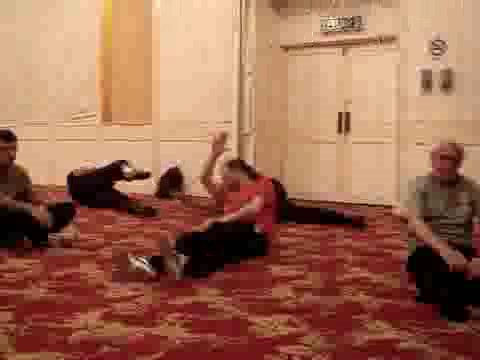
Some fine points in executing kicks and in countering them are explained in these lessons. One important aspect many students neglect is spacing. Another important point is to cover the opponent’s hands when you kick so that he cannot counter-attack you at the same time. An important point to bear in mind when you defend against kicks is not to block them. You can effectively avoid kicks by skillful use of body-movement and footwork. In the videos here Grandmaster Wong highlights that you do not even need to use your hands at all -- you may use them to drink coffee or eat cookies while defending against kicks. |
|
Felling in Taijiquan is different from that in Wrestling. In Taijiquan, size, gender and physical strength are not decisive factors.. The secret is to off-balance the opponent, and not to contest strength with him. Knowing how to fall safely is necessary to avoid injuries if we wish to practice felling techniques. Untrained persons usually attempt to stop their fall with their hand, which may result in a fractured arm or dislocated wrist. The hand should be the last part of the body to touch the ground during a fall. Course participants have a lot of fun practicing break-falls. |
|
An excellent felling technique can be implemented with the pattern “Carry Tiger Back to Mountain”. But if the opponent neutralizes it by sinking firmly into his stance, instead of struggling to fell him, it is better to change to “Jade Girl Kicks Shuttle” to kick his ribs or kidneys. “Jade Girl Kicks Shuttle” can also be used to counter “Carry Tiger Back to Mountain”. Or you may use “Black Bear Sinks Hips”, which is a marvelous technique. The secret lies in the stance. The participants are having a lot of fun felling one another or countering their partners? throws. It is delightful to find dainty fair ladies easily throwing hefty men! |
|
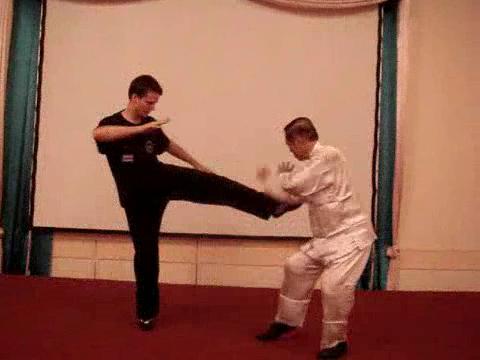
An effective counter against an opponent attempting to throw you is "Jade Girl Kicks Shuttle". If you are skillful, you can apply this counter against any throws! An excellent counter against this whirlwind or sweeping kick is "Heavenly Priest Stamps Insignia". Again, if you are skillful, you can apply this counter against any kicks, though you may have to make some modifications. Isn?t it amazing that in a short video series like this one, you learn how to use just one technique to counter any throws, and also just one technique to counter any kicks! Who says Taijiquan cannot be used for combat? |
|
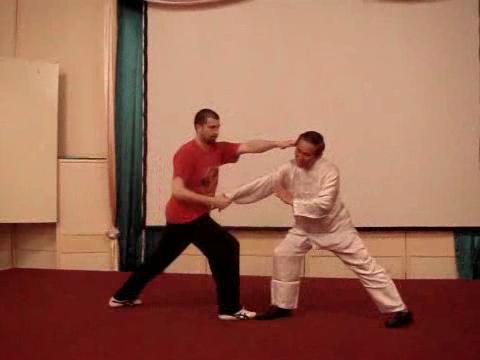
Taijiquan is quite rich in chin-na techniques, though many Taijiquan practitioners may not be aware of it. The video series shows a formidable chin-na technique. As you opponent attacks you with a right punch, grip his rright wrist with your right hand, pull him forward and simultaneously strike his throat or head with your left leopard punch. Releasing the gripped arm and sinking back to avoid the strike are important preliminary movements to defend against the attack using ?Immortal Waves Sleeves? |

|
The many chin-na techniques may be classified into two main categories -- single hand grips and double hand grips. Gripping an opponent’s arm with one hand and simultaneously striking him with the other hand falls into the category of single hand grips. Gripping an opponent’s arm with both hands, as in “Small Child Catches Snake”, and pulling him to fall forward, falls into the category of double hand grips. But if you use two hands to grip your opponent, can you hurt him. Yes, you may grip his vital points, dislocate his elbow or shoulder, and smash his head onto the ground. |
|
“Lifting Water” and “Grasping Sparrow?s Tail’ are two excellent methods to develop internal force, besides serving other important functions. A skillful practitioner may use ?Lifting Water? to generate a Small Universe and even a Big Universe. ?Grasping Sparrow?s Tail? circulate the internal force all over the body, and can be used to counter any attacks! |

|
The term “fa-jing”, which means “explode force”. is often heard but seldom understood. The internal force is being exploded to strike an opponent. Sometimes it may be used in defence. To explode force well, besides having internal force the practitioner must perform its mechanics correctly. ?Single Whip? is an excellent pattern to train ?fa-jing?. When one can explode force using ?Single Whip? , he can transfer the skills to other patterns. |
|
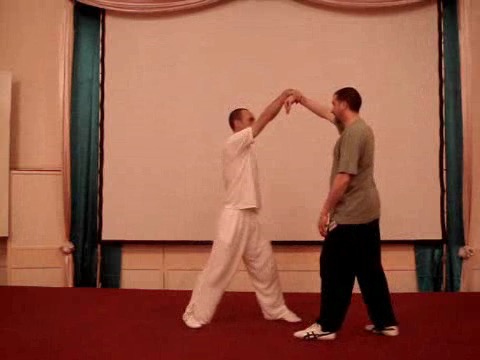
Many Taijiquan practitioners have performed Single Whip which has a palm strike on one side and a hook hand on the other. But most of them do not know what the hook hand is for. This hook hand has a few functions. Sifu Jeffrey demonstrates how it can be used to release a grip on his wrist. Grandmaster Wong explains that spread of the palm and hook hand helps to expand the chi in the body. A powerful exponent may bounce of his opponent with this expanding chi. The hook hand is also a grip. You may grip one opponent with a hook hand while you strike another opponent with your other hand. |

|
“Single Whip” provides an excellent method to train ?fa-jing? or exploding force. While internal force is exploded at the palm on one end, the other end is held in a hook hand which acts like an ?anchor? from where internal force flows to the palm. The hook hand is also an effective striking point targeting at vital points and soft spots of the opponent’s body |

|
Depending on how force is applied, it can be classified into different types. For example, when you press down or sink your arm to dislocate an opponent’s wrist, it is “sinking force”. When you place your hands in contact with an opponent to “tame” him, it is ?contact force?. When you prevent an opponent from coming in, it is “controlling force”. “Grasping Sparrow’s Tail” is an excellent method to develop and apply these different types of force. |

|
Taijiquan is also very rich in felling techniques. There is one amazing Taijiquan pattern which is very effective in felling opponents as well as for countering any throws! Do you know what pattern it is? It is ?Black Bear Sinks Hip?. In this video series Sifu Rama attempts to use various techniques to fell Grandmaster Wong, but is felled instead by Grandmaster Wong using ?Black Bear Sinks Hips?. The crucial aspect of its successful application is having a good stance. |

|
The various striking, kicking, felling and gripping techniques are now applied in free sparring. First participants practice one-step sparring, or miscellaneous techniques. One will attack with one technique randomly, and the other responds accordingly and spontaneously. Then they practice sequence sparring, which are free and spontaneous. Gradually they progress to free sparring. |

|
Participants have a lot of fun practicing free sparring where no movements are pre-arranged. Yet they can respond correctly and spontaneously. This is due to previous systematic training where participants are conditioned to respond spontaneously to specific attacks. While the sparring is free, the attacks are controlled. In other words the participants hold back their strikes and kicks if their partners fail to respond correctly. Grandmaster Wong also shows that using Taijiquan patterns for combat has great advantage over free-style fighting. |

|
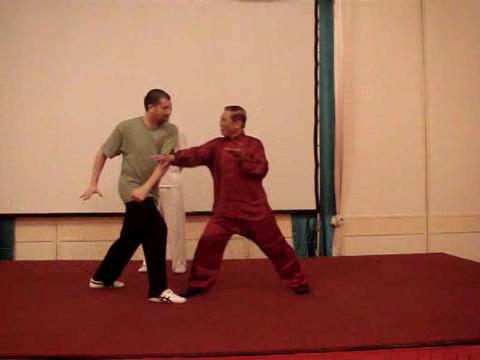
This video series shows how you can apply Taijiquan techniques against specific attacking situations in street fighting. Street fighters are rough and ferocious but usually are not advanced in combat techniques. If you are calm and obvious their movements in a chi kung state of mind, you can respond correctly and subdue them easily. |
|
Street fighters often charge in at you wildly. If you are not trained, you may be taken by surprised and freeze. But if you are systematically trained, it is not difficult to handle them effectively. One excellent way is to fell them onto the ground as they charge in. You can then have them under control. Another effective way is to intercept and control them. This has the advantage of not causing them injury. They also often kick wildly. A good way is to hook their legs. Another excellent way is to fell them onto the ground and subdue them. |

|
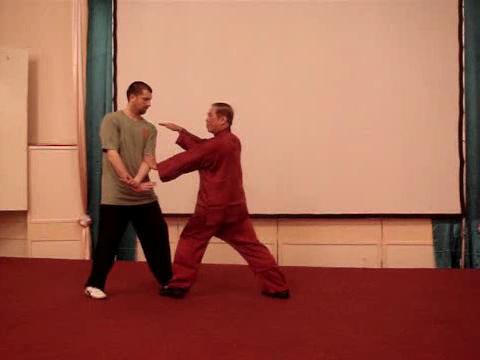
Why do we poise in a Taijiquan pattern before we attack or defend? This is because adopting a poise pattern gives us certain advantages. For example, when we are in a poise pattern, it is easier for us both to defend against an attacker as well as surprise him with a counter-attack. Before we move in to attack, we ourselves should be prepared. There are four modes of preparation: Be prepared in form, energy and mind; Assessing the opponent; Seeking or creating openings; Moving in swiftly and safely. |
|
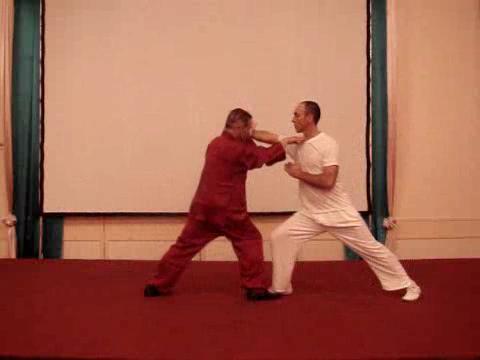
It is important to ask the way as you attack. Asking the way includes testing the opponent to assess his ability as well as open or close him for attack. When we attack, we must have three arrivals: Arrival of the heart; Arrival of the feet, Arrival of the hands All these combat principles are applicable in our daily life to enrich our performance and achievements. |
|
The pattern “White Snake Shoots Venom” is deadly. It may kill or seriously maim an opponent in just one strike. It should therefore be use with great care not only in friendly sparring but even in real fighting The technique is even more deadly when applied with the tactic of continuous attacks. An important supporting technique for its successful application is the “thread-hand”. Flowing with and overwhelming the opponent are key factors. |

|
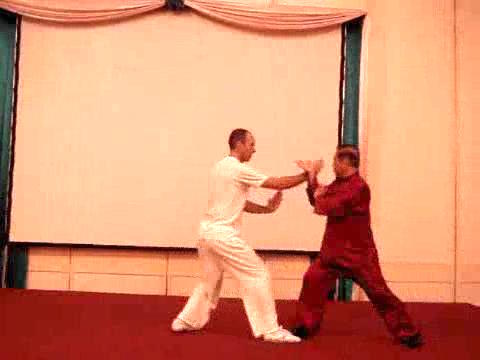
“Defence-cum-Counter” or “lian xiao tai da” is famous principle in Taijiquan, which is often heard but seldom understood. Grandmaster Wong and Sifu Rama demonstrate the secret behind this very important Taijiquan principle in Basic Combat Sequence One. This combat sequence incorporates also includes two important tactics, namely “Continuous Attacks” in ?White Snake Shoots Venom?, and “Sound East Strike West” in “Sun Enters Lotus”. |
|
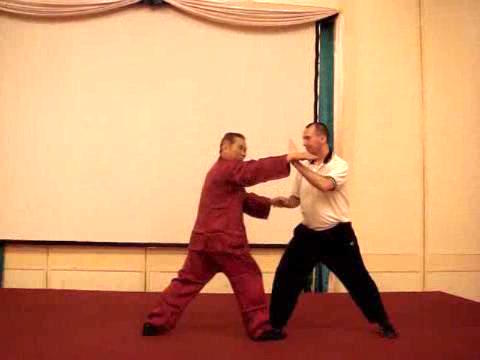
Do you know why Taijiquan is often performed slowly, especially at the earlier stages? When the patterns are performed slowly it is easier to check that the movements are correct and smooth, achieving what is often referred to as ?no beginning no ending?. Another important reason is to generate an internal energy flow. Thirdly, it facilitates sensing an opponent?s movements as well as intention, and then using his momentum to overcome him. Of course, Taijiquan can, and should, be perform very fast too. |
|
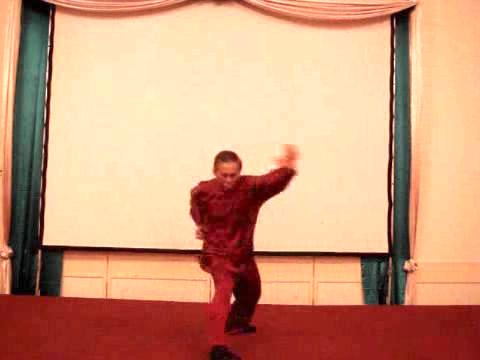
During your combat sequence training, what should you do if your partner hesitates? There are a few excellent options. You could ignore that part of the sequence, and continue the next attack pattern. Or you could add another attack pattern, then continue your sequence as usual. This is a very important combat skill in sparring. If you are skillful in it, you can easily overwhelm your opponent in friendly sparring or real fighting. |
|
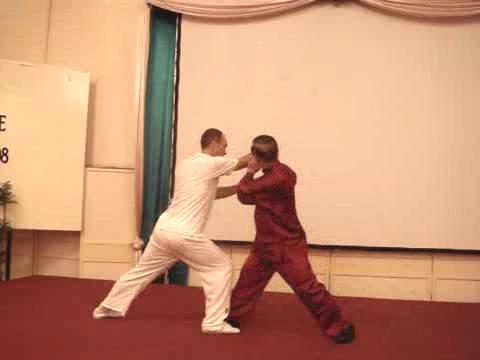
This is Taijiquan Basic Combat Sequence One, which is named ?Immortal Waves Sleeves? after the signature pattern in the responder?s mode. It is performed here in three different speeds ? slow, normal and fast. Irrespective of the speed, the movements should be smooth and flowing. |
|
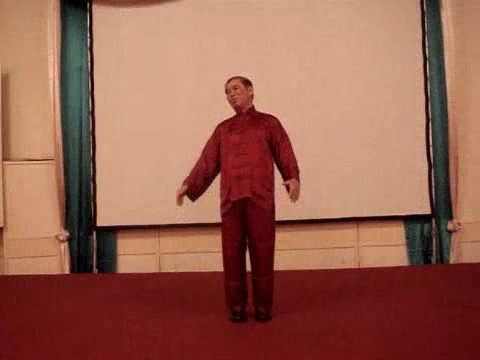
Rotating the waist is very important in Taijiquan. It constitutes one of the reasons why a smaller-sized person can overcome a stronger opponent. Grandmaster Wong demonstrates how this is achieved when deflecting Sifu Rama’s attack. Another important point is to use chi flow and not brute strength when releasing a grip. |
|
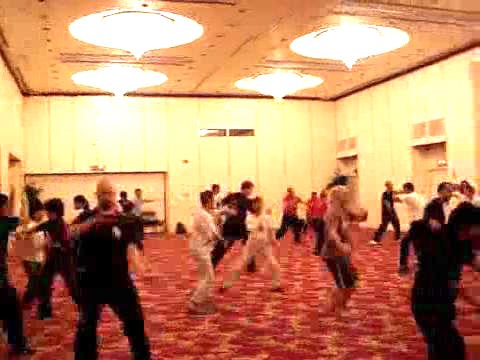
What Yang Lu Chan practiced thousands of times everyday and used to defeat his opponents was probably “Cloud Hands”. “Cloud Hands” does not have fixed forms. It is a shortened form of the poetic expression, “Flowing Water Floating Cloud Hands” used to describe the flowing movements of Taijiquan in chi flow. In the video series here, Grandmaster Wong demonstrates some fundamental movements in Cloud Hands, like circular and horizontal hand movements, moving in different stances, and exploding force in various patterns. |
|
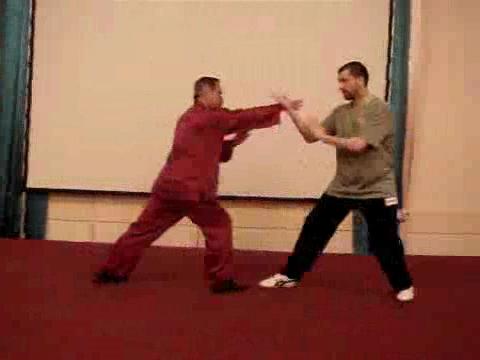
Many Taijiquan masters regard the ability of using mind to direct chi flow, which in turn directs physical forms is a very advanced skill in Taijiquan. It is incredible but true that participants in our Intensive Taijiquan Course are able to do so. The videos here show the participants using mind to direct chi flow to perform various Taijiquan movements, including exploding force and executing kicks. They start with Cloud Hands, then apply the flowing chi to perform various Taijiquan movements. |
|
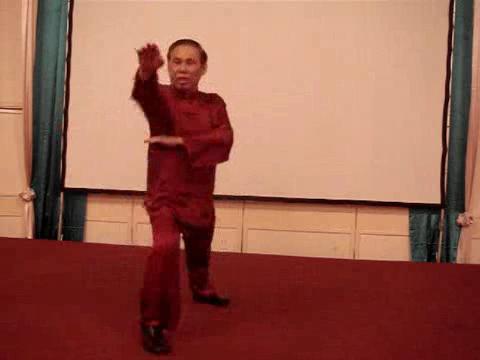
An important principle in our sparring methodology is “addition and subtraction.” We initiate with one sequence, then we continue, or add, another sequence. For example, we may initiate with Sequence 1, then add Sequence 2, or we may initiate with Sequence 2, then add Sequence 1, or in other combinations of the two combat sequence. "Subtraction" will be dealt with later. After this, Grandmaster Wong and Sifu Jeffrey demonstrate Combat Sequence 3. They perform in both fast movement as in combat, as well as in slow movement to show the patterns more clearly. |
|
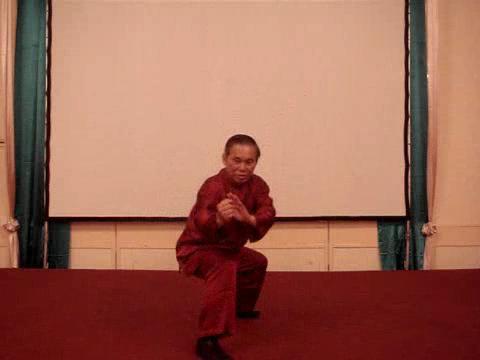
Grandmaster Wong reviews Combat Sequence 2, which is ?Low Stance Vertical Punch? (or ?Sun Enters Lotus?), and Sequence 3, which is ?White Snake Shoot Venom?. The sequences are performed in solo in full, as well as in the initiator?s and in the responder?s mode. The three combat sequences are linked together to form a set, also called ?White Snake Shoots Venom?. Hence, the term "White Snake Shoots Venom" may refer to a pattern, a sequence or a set. All these three are found in this video series. |
|
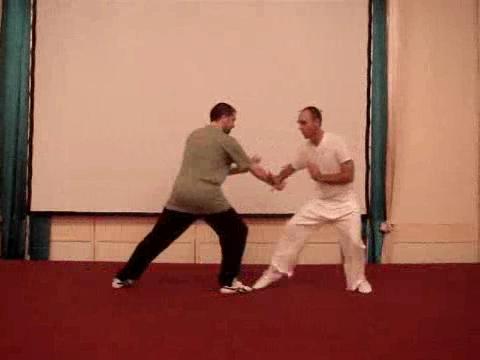
Many martial artists have a mis-conception that sets came first, and masters took patterns from the sets to use them in combat. In reality, the progression is the other way round. Patterns came first, evolved from actual fighting experience. Masters linked suitable patterns into a sequence.. The sequences were then linked together to form a set. This video series shows course participants reliving this progression from patterns to sequences to set in the review of the three combat sequences that form the set “White Snake Shoots Venom”. |
|
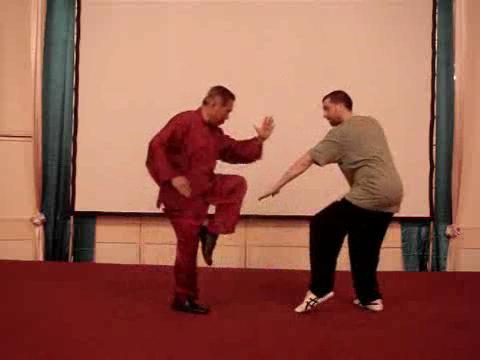
As usual, many important points are revealed while learning this sequence, one of which is what you should do when pressed into a difficult position like at the edge of a cliff. One strategy is to force your opponent back with some continuous, aggressive attacks to regain space. Another, if you are skillful, is to reverse the position, pushing your opponent down the cliff instead. Sifu Jeffrey and Sifu Rama then demonstrate linking all the four combat sequence in an attack, which is a useful way to practice the sequences as well as an effective tactic for combat. |
|
Grandmaster Wong and Sifu Jeffrey demonstrate Combat Sequence 5, “White Crane Flaps Wings”. This sequence is so-called because of its signature attack, which is a deadly organ-seeking kick using the pattern “White Crane Flaps Wings”. Interestingly, the counter from the responder is also the pattern “White Crane Flaps Wings”, though it may looks different from the attack pattern because of some modifications. The response is not a block, but a counter-attack chopping the kicking leg using the tactic of “counter-without-defence”. |
|
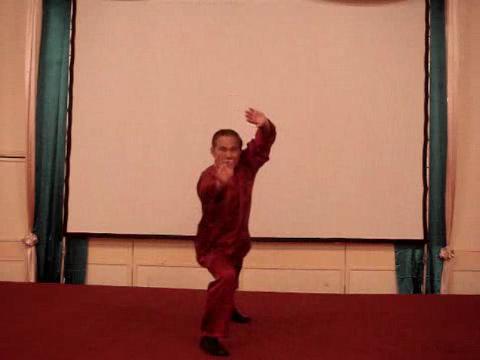
Grandmaster Wong reviews Combat Sequence 4, which is “Green Dragon Shoots Venom”, and Combat Sequence 5, which is “White Crane Flaps Wings”. If you observe the patterns in the two sequences carefully, you will notice that Sequence 5 is a development from Sequence 4. In the same way, Sequence 3 is a development from Sequence 2, which in turn is a development from Sequence 1. When you understand this progression, you will not only learn the sequences more easily, you will also have other advantages. What advantages can you think of? |
|
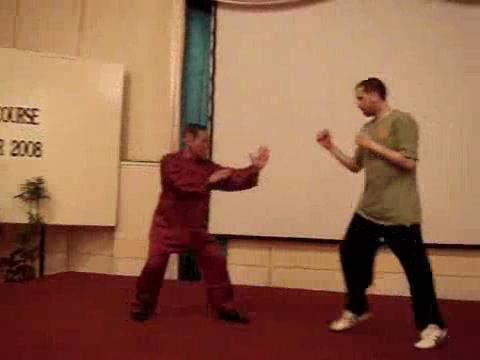
It is commonly thought that Taijiquan is slow, and Boxing fast. It may be a surprise to many people that technically Taijiquan is faster than Boxing in many aspects. When we know our technical advantages and make good use of them, we shall be in a better position to beat a Boxer or any opponent. Our stances and body-movement also give us many technical advantages. |
|
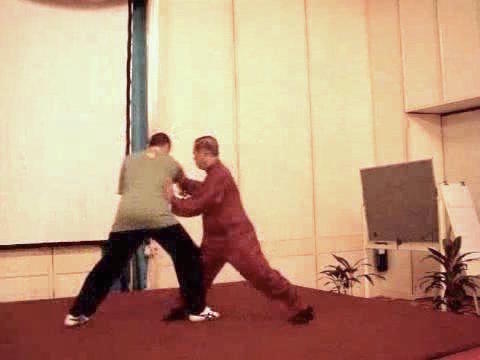
“Fierce Dragon Across Stream” combined with effective footwork is a formidable technique to use in pressing attacks. Many people merely move back when faced with such pressing attacks, which often results in them being pressed to a wall. An effective response is to side-step and counter-attack, using a pattern like “Jade Girl threads Shuttle” as demonstrated in this video series. |
|
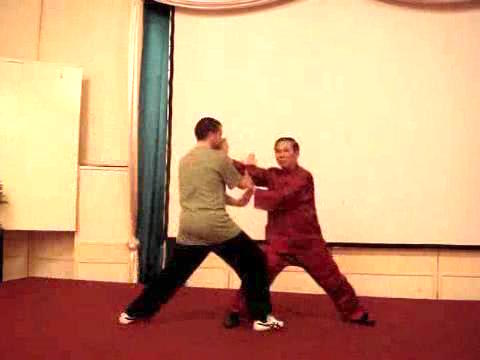
This is Combat Sequence 6, “Striking Tiger Poise”, which is named after its signature pattern. This pattern is an excellent response against any kick! It is important to keep your hands away from an opponent’s kicks. Later, when you are skillful, you may strike the kicking leg with your hand. |

|
The second combat application set in our school is called ?Green Dragon Shoots Pearl?, which contains some kicking attacks and counters. The term “Green Dragon Shoots Pearl” may also refer to a particular sequence or a particular pattern. The set here is formed from three combat sequences, namely “Green Dragon Shoots Pearl”, “White Crane Flaps Wings” and “Striking Tiger Poise”. |
|
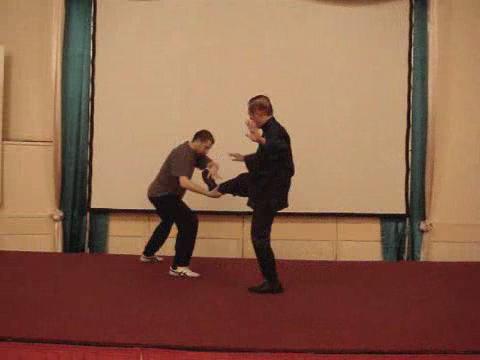
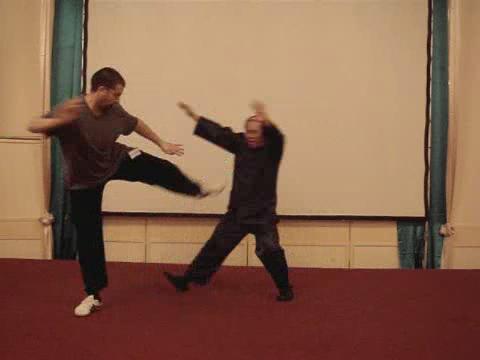
This is Combat Sequence 7, “Thrust Kick”. It is an effective sequence for pressing attack. If you are skillful, you can just apply this sequence on your opponent and force him against a wall. You may keep repeating the sequence if needed. You have to be prepared if your opponent grasps your kicking leg. An effective counter, which you should apply immediately as he grasps your foot, is to stamp your leg down and simultaneously strike his head with a hanging fist. You need to take care of your groin as you stamp down your foot. |
|
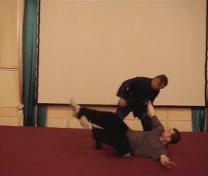
This is Combat Sequence 8, “Low Stance Single Whip”. This sequence contains effective kicking attacks and their counters. When an opponent attacks you, almost irrespective of what attacks he may employ, an effective response is to side step and simultaneously executes a side kick. If he blocks or avoids the kick, follow immediately with a whirlwind kick. An effective response against such attacks is shown in the video clip. |
|
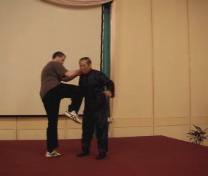
“Black Bear Sinks Hips” is perhaps the most amazing pattern in demonstrating the famous Taijiquan principle of using minimum force against maximum strength. When an opponent tries to fell you, using, for example, an pattern like “Carry Tiger Back to Mountain”, you merely sink your hips to fell him instead. A good stance is necessary for a successful application of this technique. It looks so simple and remarkable that many people may not believe that it can work. |
|
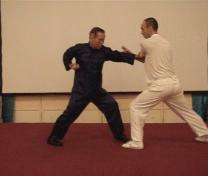
Thai knee jabs are feared by many martial artists who do not know how to defend against such powerful and ferocious attacks. It is not normally realized that using such attacks is not advisable in real fighting without safety rules because they expose the attackers dangerously. An effective counter against Muay Thai knee jabs is “Child Immortal Carries Flag”. You can also employ “Green Dragon Shoots Pearl” to counter the knee jabs. If the opponent grips your neck, you may counter with “Push Boat According to Current”, felling the opponent onto the ground. |
|
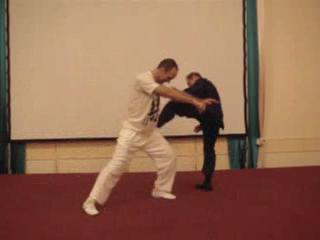
“Pressing Attack” is a very effective tactic, often forcing an opponent against a wall. But you need considerable skills to apply this tactic well. Covering the opponent adequately so that he cannot attack you, is crucial. The secret of this tactic is to flow with the opponent and use his momentum against himself. Combat Sequence 7, “Thrust Kick”, is an example of Pressing Attack. |
|
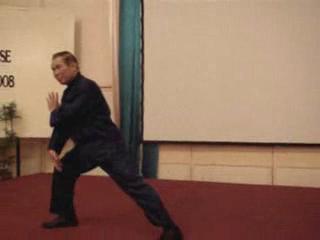
There are numerous ways to counter Pressing Attacks. One effective way is to stop the Pressing Attacks with ?Immortal Waves Sleeves?. A good Bow-Arrow Stance with good body-movement is necessary. Another effective way is to grip the opponent?s attack hand and pull him onto the ground. You can execute this technique using the pattern “Little Child Catches Snake”. A third way is to side step and kick the opponent as he attacks. |
|
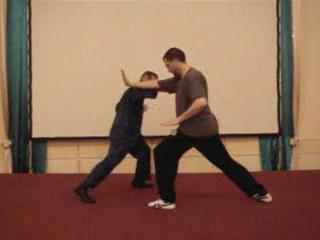
In executing the Shoulder Strike, many students make the common mistake of striking from the shoulder. The correct movement is striking from the back leg! In other words, the momentum of your Shoulder Strike comes not from your shoulder but from your back leg. It is important to provide adequate coverage for yourself as you strike with your shoulder, otherwise it is easy for your opponent to strike your eyes or groins as you attack. The Shoulder Strike is found in Combat Sequence 10, which naturally is called “Shoulder Strike”. |
|
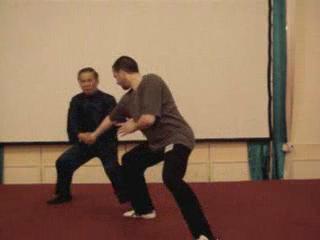
The saying “starting later but arriving earlier” is often heard in Taijiquan, but not many practitioners really know what it means, less know how to employ this principle in combat. One excellent example of applying this principle is found in Combat Sequence 11, “Cloud Hands”. It is worthy of note that the successful application of this principle depends not on merely moving faster than your opponent but on timing and precision. |
|
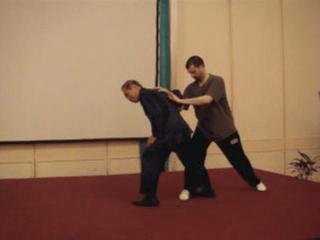
This is Combat Sequence 11, “Cloud Hands”. Grandmaster Wong shows some finer points in implementing the often heard but little understood principle of “starting later arriving earlier”. He also shows how to use just one hand to release a double wrist and elbow grip of an opponent using two hands. These examples reflect the beauty and profundity of Taijiquan. |
|
Kungfu patterns are alive. Sometimes a pattern can be employed in ways far beyond what it appears to be. “Fierce Dragon Across Stream” in Combat Sequence 12 is a good example. Normally “Fierce Dragon Across Stream” is used as a palm strike. But here it is used as a chin-na technique to hold an opponent?s arm behind his back. ?Carry Tiger Back to Mountain? is an excellent counter. Here it is executed as if effortlessly that it succinctly reflects the soft, graceful nature of Taijiquan. |

|
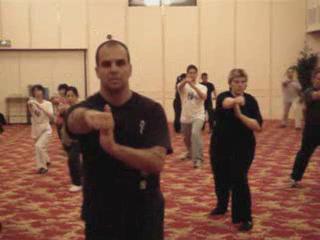
Grandmaster Wong uses “Fierce Dragon Across Stream” to hold Sifu Jeffrey’s arm to his back. Sifu Jeffrey responds with “Carry Tiger Back to Mountain”, attempting to fell Grandmaster Wong onto the ground. Grandmaster Wong neutralizes the felling technique and counters with “White Snake Shoots Venom”. These attacks and counters are contain in Combat Sequence 12, “Carry Tiger Back to Mountain”. It is worthy of note that the success or otherwise of these combat applications lies not in the patterns themselves but in their footwork. |
|
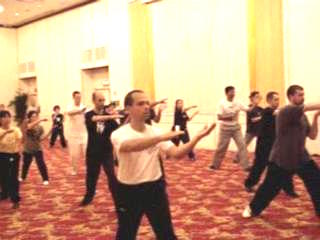
This is Combat Application Set 4, “Carry Tiger Back to Mountain”. The set is formed from Combat Sequences 10, 11 and 12, which are “Shoulder Strike”, “Cloud Hands” and “Carry Tiger Back to Mountain”. Hence, the term “Carry Tiger Back to Mountain” may refer to a sequence or a set. It may also refer to a pattern. |
|
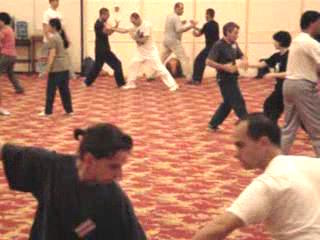
How long does it take to learn a kungfu set? Most persons would take a few months but the course participants took only one day! Though this is not quite accurate because they were supposed to have familiarized themselves with the movements before they attended the course, this highlights the speed we in Shaolin Wahnam learn kungfu forms. But we still need time to practice the set so that we become proficient in its performance and application. The video clips here show course participants linking respective combat sequences into Taijiquan sets. Two sets can be formed from these sequences. Do you know what they are? |
|
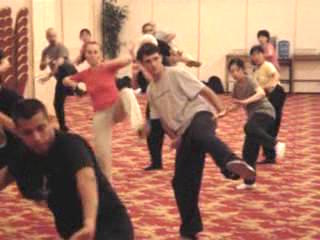
A major problem facing most kungfu practitioners today is that they are unable to apply their kungfu forms for combat. Happily we overcome this problem. Indeed, a hallmark of our school is that we use the same kungfu forms both in our solo practice and in our sparring. A major aspect in our sparring methodology is combat sequences. Here, course participants review the first six Taijiquan combat sequences in the initiator's mode, then apply them in sparring. |
|
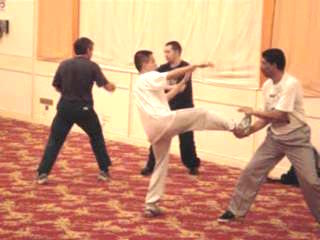
Using combat sequences helps us to overcome two major problems faced my most kungfu practitioners, namely how to apply kungfu patterns in attack, and how to response spontaneously with the appropriate kungfu techniques. The video clips here show course applications using Taijiquan Combat Sequences 7 and 8 which focus on kicks. |
|
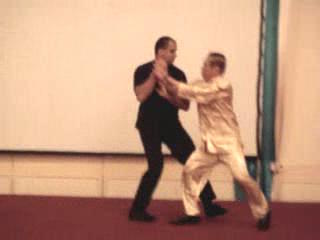
As Taijiquan is an internal martial art (certainly not a dance), naturally two fundamental aspects are internal force and combat application. The video clips here show course participants manifesting these two fundamental aspects of Taijiquan in their chi flow, which is an essential element of internal force development, and in applying Taijiquan techniques in combat. Taijiquan is also an effective way of spiritual cultivation, manifested here in meditation. |
|
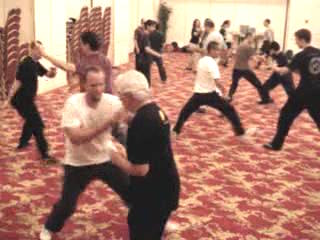
Obviously your chance of beating an opponent is more if you attack him many times continuously than just one time. You must, however, be able to counter if your opponent surprisingly hit back. Continuous attacks when applied skillfully are formidable. They often put an opponent in a helpless position. Nevertheless, there are many methods to neutralize or counter continuous attacks. |
|
You may counter an opponent at many points during his attack. For convenience, we may classify them into three stages, at the initial stage, at the middle stage and at the ending stage. You may have just one counter, or you may reverse and attack your opponent continuously. At times it is a good tactic to just let your opponent attack. What useful functions can you get from this tactic? |
|
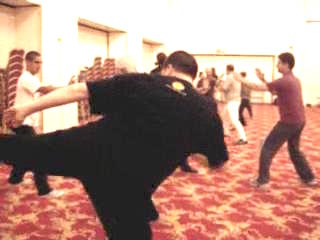
It is a mis-conception by some practitioners that kungfu, especially Taijiquan, has few or no kicks. Combat Sequences 5, 6, 7 and 8, for example, focus on kicks. It is easy to defend against kicks if you know how. Striking an opponent as soon as he drops his leg after a kick is a good tactic. You must, however, covers his hands and legs as you move in to attack. |
|
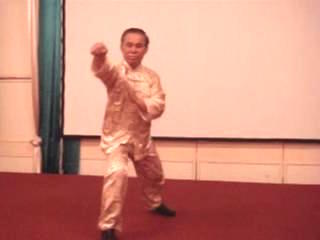
By linking some combat sequences together, we can form a set. "Black Bear Sinks Hips", which is our third combat application set, is formed from three combat sequences, namely "Thrust Kick", "Low Stance Single Whip". and "Black Bear Sinks Hips". The term "Black Bear Sinks Hips" may be applied to a set, a sequence or a pattern. |
|
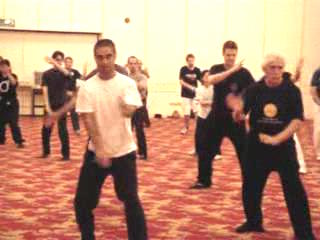
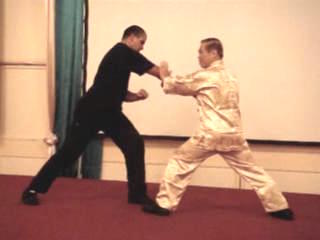
"Carry Tiger Back to Mountain" is our fourth combat application set. It is composed from three combat sequences, namely "Shoulder Strike", "Cloud Hands". and "Carry Tiger Back to Mountain". The term "Carry Tiger Back to Mountain", therefore, may be applied to a set, a sequence or a pattern. |
|
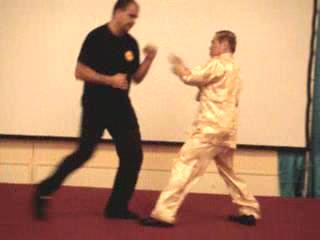
Today, irrespective of what martial arts they practice, many martial artists use Boxing when they spar or fight. Hence, if you wish to be combat efficient, you need to be able to handle Boxers competently. Many people find it hard to fight against Boxers because they are fast. But if you know some useful techniques and have the required skills, handling a Boxer is not difficult. This series of video clips shows some important factors you should be proficient in if you wish to handle Boxers competently. |
|
Keeping correct spacing is very important when fighting against a Boxer, or any martial artist for that matter. If you can keep good spacing and with good body-movement, you can effectively overcome the speed of a Boxer's punches, which is his strong point. Having a good stance is crucial in keeping good spacing. With your guard hand in front, you will find that it is difficult for a Boxer to reach you even when he is fast, because as soon as he moves close enough you can strike him with your guard hand. |

|
The tactic of "close and srrike" is very effective in countering a Boxer. When a Boxer attacks you with jabs or crosses, close his hands with your Tiger-Claw and strike himwith your Leopard Punch. It is very important you have closed him thoroughly so that he cannot attack you while you strike him, otherwise you will be exposed to his fast punches. If he bounces away, cover the gap and close and strike him. Our wider stance enables us to easily cover the space of a Boxer's bouncing. |

|
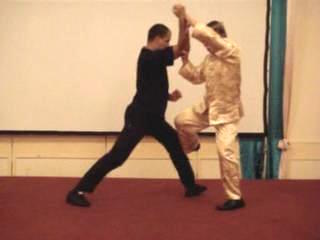
Besides closing an opponent, you may also open him. A good opportunity is when a Boxer swings a hook punch on you. You can respond using "Jade Girl Threads Shuttle", deflecting his hook punch with one hand, thus opening him, and striking him with the other palm. If he swings the other hook punch or throw a cross punch at you with the other hand, you repeat "Jade Girl Threads Shuttle" with reverse hands. |
|
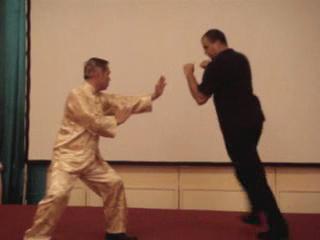
A Boxer's attacking techniques are quite limited. Apart from jabs, crosses and hooks, the other common attack is an undercut. A good counter against the undercut is "White Monkey Bends Branch", gripping or dislocating the opponent's elbow and felling him onto the ground. This is a very effective technique, so do be careful not to hurt your partner when practicing with him. |
|
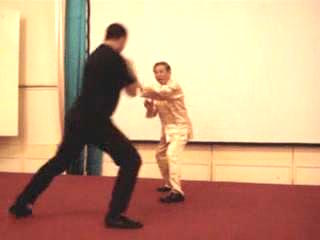
When a Boxer bounces around you, a big mistake is to follow his steps and bounce with him. A good response is to observe him while at your stance and change steps when necessary. He may need to bounce five or six steps to go round to the other side, but you need only to change one step to face him. While he is bouncing around, you may break his momentum and move in swiftly to attack. |
|
There are many effective Taijiquan techniques against Boxing. As a Boxer attacks, you may close or open him and counter attack. It is important that you should cover yourself well when attacking a Boxer as his punches are fast. A good technique to open or close a Boxer is to use "Lift Hand" as he punches. You can also apply chin-na techniques on a Boxer, or to move in swiftly to strike while he bounces about. |
|
A main reason why it is easy to fight against Boxers is because their techniques are limited. If you grip a Boxer, for example, he would have no techniques in his art to counter you. In contrast, kungfu techniques are so extensive. There are so many ways a kungfu exponent can release himself when you grip him. |

|
It is also not difficult to fight against Kick-Boxers. Their punches can be handled the same way as handling Boxers. There are some effective techniques against their kicks. An effective technique is to strike their legs whenever they kick. Another effective technique is to fell them as soon as they place their legs on the ground after kicks. |
|
Handling Muay Thai fighters is not easy. They are fast and powerful, and often tricky. Their attacks usually come in a series, seldom in isolation. Their elbow and knee strikes are formidable. But we have effective Taijiquan techniques against them, and when applied skillfully even a fragile-looking lady can fell a ferocious Muay Thai fighter! |

|
It may be of interest for some to know that all the popular Muay Thai techniques, like the formidable elbow and knee strikes, are also found in Taijiquan. They correspond to "Press Elbow" and "Golden Cockerel Stands Solitarily" in Taijiquan. On the other hand, many Taijiquan techniques are not found in Muay Thai. These include "Repulse Monkey" (or "Plant Willow in Front of Camp" in Shaolin Kungfu) and "Carry Tiger Back to Mountain". which are excellent in throwing Muay Thai fighters onto the ground. |
|
The "shoot" is actually an unwise attack to use in real combat because it dangerously exposes the attacker's head to the opponent. The assumption that the attacker is too fast in his shoot for an opponent to strike his head, is also unwise. But as many martial artists use it nowadays, it is necessary to know counters against this attack. The video clips also show course participants in free sparring. Free sparring in Shaolin Wahnam is not only injury free but also full of fun and laughter. |
- The Most Important Lessons in Wahnam Taijiquan
- The Art of Flexibility
- Reliving Taijiquan Footwork Principles of Past Masters
- From Moving Slowly and Gracefully to Moving Fast and Spontaneously
- There is More in Changing Directions than What Most People Think
- The Importance of Waist Rotation in Taijiquan
- Applying Waist Rotation to Realize Using Minimum Force against Maximum Strength
- From Tao to Cloud Hands to Grasping Sparrow's Tail
- Solo Form Practice is Not Just to Please Spectators
- Developing Skills in Stationary Pushing Hands
- The Six Harmonies of Hands, Body, Feet, Essence, Energy and Spirit
- Basic Principles and Safety Precautions in Pushing Hands
- How to Have Leverage Advantage in Pushing Hands
- The Standard Mode and the Advanced Mode of Rolling Back
- Age, Size and Sex and Not Decisive Factors in Pushing Hands
- Ensuring your Safety First when you Push or Execute any Attack
- Gaining a Tactical Advantage by Maneuvering your Opponent to use an Unfavoured Hand or Leg Mode
- Gaining a Tactical Advantage by Pushing or Attacking your Opponent from a Side
- You can Enjoy Pushing or Being Pushed Around Irrespective of Age, Sex and Size
- Defence against the Left and the Right Push
- How to Get to your Opponent?s Back and How to Neutralize it
- The Proactive Tactics of Continuous and Confusing Attacks
- The Reactive Tactics of Immediate Counter and Interception
- Pushing Hands Brings Many Benefits and a Lot of Fun
- Progressing to Striking Hands where Techniques are Applied for Combat
- Our Classes are Full of Fun and Laughter
- The Signature Taijiquan Tactic of Deflect cum Counter
- Useful Tactics for Taijiquan and for Daily Life
- Opening, Closing or Deflecting an Opponent's Attack while Countering
- Top, Middle and Low Strikes, and their Defences
- Correct Spacing and Adequate Closing in Yellow Bee
- Jade Girl is as Beautiful to Watch as it is for Combat
- Applying the Four Basic Hand Strikes and Counters to Play with a Boxer
- An Excellent Taijiquan Pattern against Kicks
- Spacing. Timing and Body-Movement in Striking Tiger Poise
- Striking Tiger Poise Against Any Kicks
- Striking an Opponent Before he has Recovered from Previous Movement
- Important Principles in Executing Kicks and in Countering Them
- Learning How to Fell an Opponent as well as How to Fall Safely
- It is Delightful to See Dainty Ladies Throwing Hefty Men!
- A Technique to Counter Any Throws, and a Technique to Counter Any Kicks!
- A Formidable Chin-Na Attack and its Defence
- Single Hand Grips and Double Hand Grips in Chin-Na Attacks
- The Marvels of Lifting Water and Grasping Sparrow's Tail
- The Mechanics of Fa-Jing using Single Whip
- What Functions does the Hook Hand Serve
- Acting as Anchorage and Striking at Vital Points
- Grasping Sparrow's Tail and Different Types of Force
- Black Bear to Fell Opponents and to Counter All Throw
- From One-Step Sparring to Sequence Sparring to Free Sparring
- Free Sparring but Hits are Controlled
- Applying Taijiquan against Street Fighters
- Handling the Charges and Kicks of Street Fighters
- Poise Patterns and Four Modes of Preparation
- Asking the Way and Three Arrivals
- White Snake in Continuous Attacks
- Defence-cum-Counter and other Tactics
- Do you Know Why Taijiquan is often Performed Slowly?
- What should you do When your Opponent Hesitates?
- Immortal Waves Sleeves in Three Different Speeds
- Some Important Lessons in Combat Sequence 2
- Fundamental Movements of Cloud Hands
- From Cloud Hands to Using Mind to Direct Form
- "Addition and Subtraction" in Sparring Methodology
- "White Snake Shoots Venom" as a Patterm a Sequence and a Set
- From Patterns to Sequences to Sets
- What would You do if You were Pressed to the Edge of a Cliff?
- Combat Sequence 5 - White Crane Flaps Wings
- Progression of Combat Sequences in Combat Application
- Making Good Use of our Technical Advantages
- Side-Step and Counter against Pressing Attack
- An Effective Response against Any Kicks
- Combat Application Set 2 - Green Dragon Shoots Pearl
- What would You Do if your Kicking leg is being Held?
- Effective Kicking Attacks and their Defences
- The Simplicity and Profundity of Black Bear Sinks Hips
- Counters against Muay Thai Knee Jabs
- Overwhelming your Opponents with Pressing Attacks
- Counters against Pressing Attacks
- The Mechanics of the Shoulder Strike
- Starting Later but Arriving Earlier
- Combat Sequence 11 - Cloud Hands
- Making Kungfu Alive with Fierce Dragon
- Combat Sequence 12 - Carry Tiger Back to Mountain
- Linking Sequences to Form a Set
- Learning a Set in Just One Day
- Applying Combat Sequences in Sparring
- Applying Kicks and Responding to Them in Taijiquan Sparring
- Taijiquan as an Internal Martial Art
- Continuous Attacks and their Counters
- Countering Opponents' Attacks at Various Points
- Kicking Attacks and their Counters
- Combat Application Set 3 - Black Bear Sinks Hips
- Combat Application Set 4 - Carry Tiger Back to Mountain
- How to Handle Boxers Competently
- The Important Roles of Footwork and Guard Hand
- The Effective Tactic of Close and Strike against Boxers
- Opening an Opponent with Jade Girl Threads Shuttle
- Countering Undercuts with White Monkey Bends Branch
- How to Handle a Boxer Bouncing Around You
- Effective Taijiquan Techniques against Boxing
- Limitation of Boxing Techniques for Real Fighting
- Taijiquan Techniques against Kick-Boxing
- Taijiquan Techniqes against Muay Thai
- Muay Thai Techniques in Taijiquan
- Countering the Shoot and Enjoying Free Sparring
LINKS